
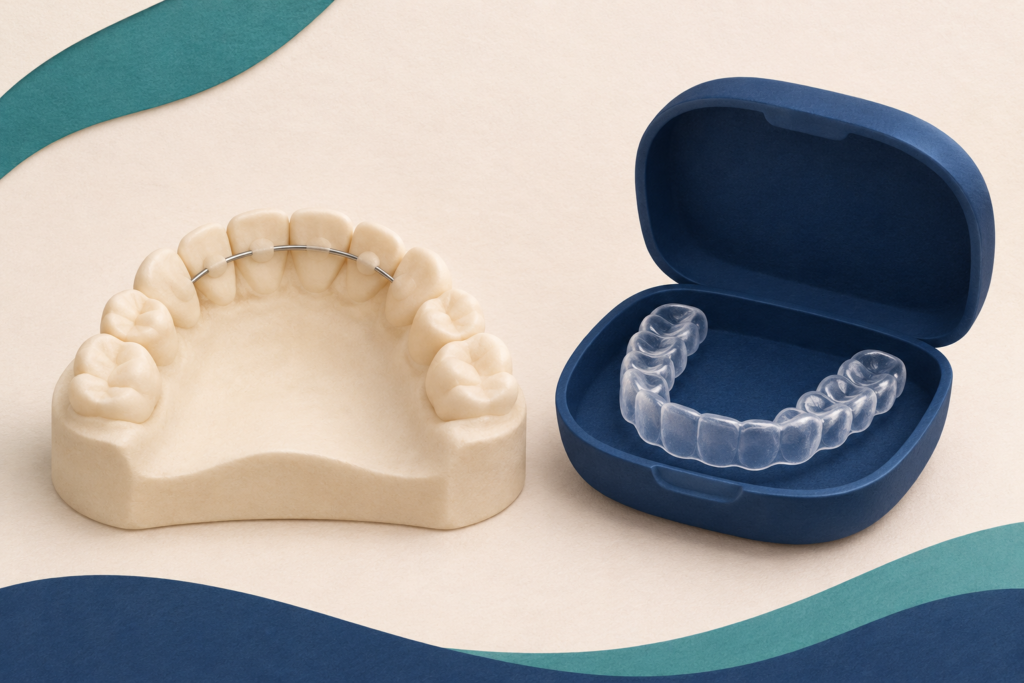
Fixed and removable retainers have the same broad aim—helping maintain tooth position—but their daily care differs. The choice should follow your orthodontic assessment, not a rule that one type is best for everyone.
The main practical differences
A fixed retainer is bonded behind selected teeth. A removable retainer may be a clear tray or a wire-and-acrylic Hawley design. Nottingham University Hospitals' retainer information illustrates these types. Its local treatment packages, charges and wearing schedules are not instructions for patients at this practice.
A fixed appliance stays in place, but it still needs cleaning and checks. A removable appliance requires you to follow the prescribed wearing routine and keep it safe when it is out of your mouth. Neither option removes the need for ongoing dental care.
Questions to compare the options
- Which teeth would this retainer hold, and why is it recommended?
- What daily cleaning technique should I use?
- How often should I wear a removable appliance?
- Would I need more than one type of retainer?
- Who checks the fit or bonded wire over time?
- What should I do if it becomes loose, breaks or feels different?
- What are the likely repair or replacement costs?
Make the plan workable
Discuss work, travel, dexterity and any difficulty remembering appliance wear. Ask the clinician to demonstrate care and explain the review arrangement. The most suitable design needs to account for your teeth and your ability to manage it.
Our retainers information explains retention after treatment. If you already have a fixed wire, do not assume it means a removable retainer is unnecessary; check your own prescribed plan.
Seek advice if the wire loosens or an appliance no longer fits. Do not change a wearing schedule solely because another person's instructions differ. Long-term maintenance is part of the original orthodontic decision, not an optional guarantee that teeth will never move.
Clinical Note: Any surgical or invasive dental procedure carries risks. Before proceeding, you should seek an opinion from an appropriately qualified dental practitioner. The information on this website is for general educational purposes only.