
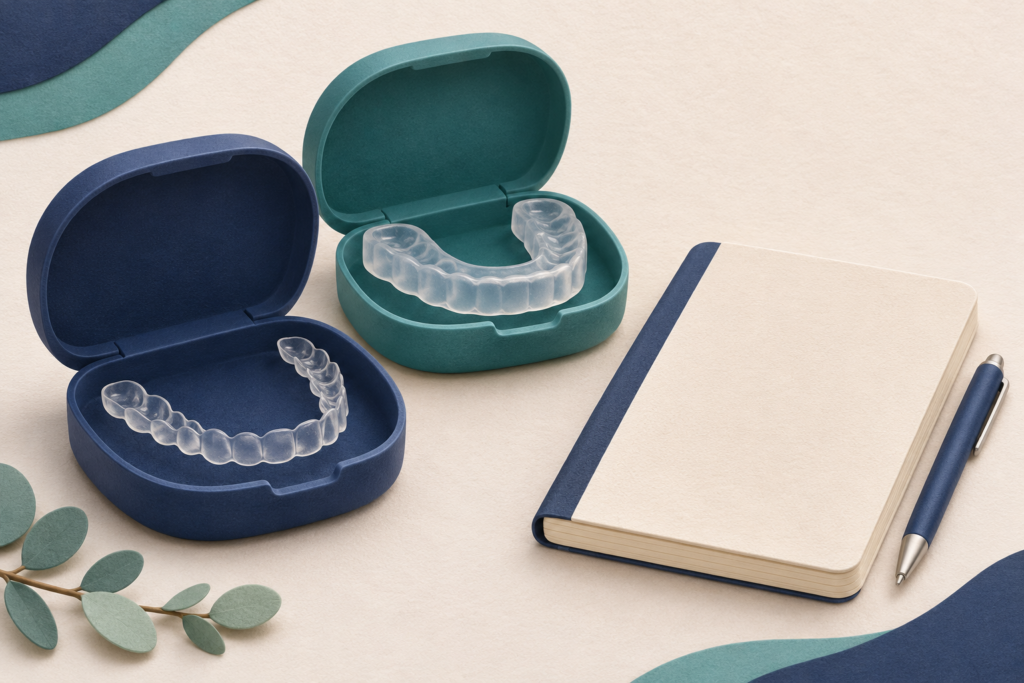
A retainer and a night guard are not automatically interchangeable. A retainer is intended to help maintain tooth position after orthodontic treatment. An occlusal splint, often called a night guard, may be recommended to protect teeth affected by grinding or clenching.
Similar appearance does not mean the same job
The Australian Dental Association's bruxism information explains that a splint may protect teeth but does not stop grinding itself. It also distinguishes a custom occlusal splint from a sports mouthguard. Suitability depends on assessment; not everyone who clenches needs a splint.
A thin clear retainer should not be assumed to provide the same protection as a prescribed splint. Equally, wearing a night guard does not establish that your orthodontic retention needs are covered. Ask how both purposes will be managed in your particular case.
Bring both concerns to the same discussion
- What evidence suggests grinding or clenching is affecting my teeth?
- Is my current retainer damaged, worn or no longer fitting?
- How will any new appliance affect the retention plan?
- Can the proposed design address both needs, or is another arrangement necessary?
- Who will coordinate advice if different clinicians are involved?
- How often will the appliance, bite and tooth positions be checked?
Do not combine appliances without advice
Bring your existing appliances and wearing instructions to the appointment. Do not stack appliances, trim them to fit together or substitute a shop-bought guard for a prescribed plan without discussing it with the treating clinician.
Our retainers page and bruxism management information explain the two treatment contexts. Describe jaw symptoms, broken restorations or changes in your bite when arranging assessment.
Ask for written instructions covering wear, cleaning and follow-up. If a new appliance is proposed, clarify its limitations and fees. The goal is a coordinated plan for your own teeth—not an assumption that any plastic appliance worn at night performs every function.
Clinical Note: Any surgical or invasive dental procedure carries risks. Before proceeding, you should seek an opinion from an appropriately qualified dental practitioner. The information on this website is for general educational purposes only.