
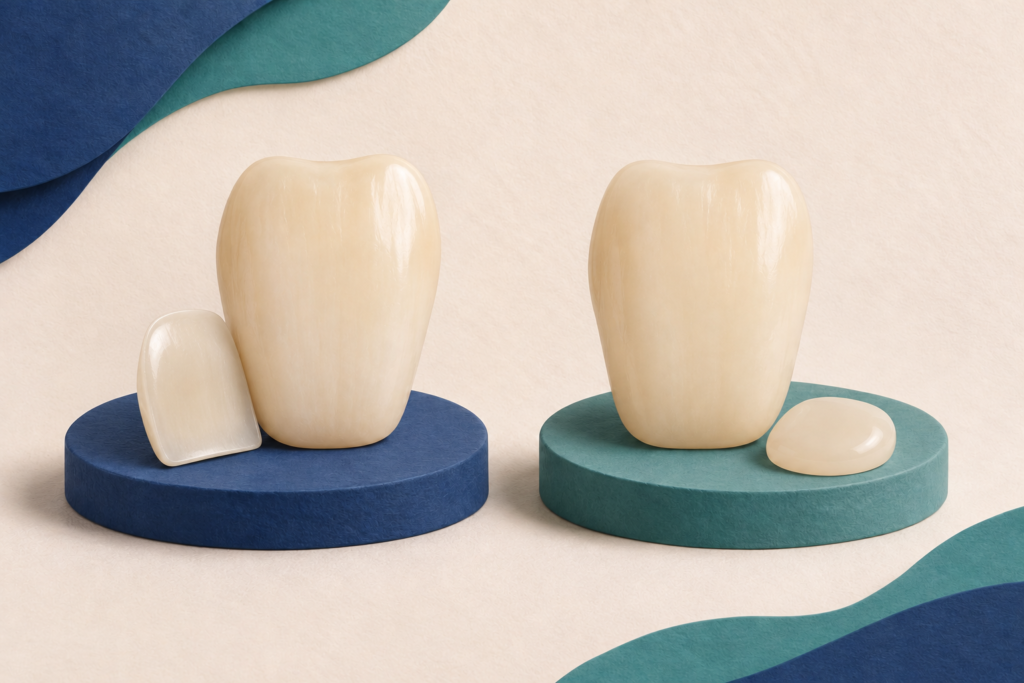
Composite bonding adds tooth-coloured resin to a tooth; a porcelain veneer is a custom-made shell bonded to its front surface. The choice depends on the tooth and the proposed change. Neither option is automatically appropriate for a healthy tooth or a cosmetic concern.
Preparation and future treatment matter
Porcelain veneers commonly require enamel removal, which is irreversible. Composite may involve less preparation in some cases, but a no-preparation or fully reversible result should not be assumed. Both can chip or need repair or replacement. The American Dental Association's veneer guide describes these considerations.
Our tooth bonding page and dental veneer page explain the treatment categories. Ask your dentist to identify the exact surface changes proposed rather than relying on the label bonding or veneers.
Compare the same clinical problem
- Is the concern a small chip, the colour, the shape or the position of the tooth?
- How much healthy tooth would be altered for each option?
- Could monitoring, whitening or orthodontic treatment address the concern instead?
- How do my bite and any grinding affect the options?
- What can be repaired locally, and what might require full replacement?
- What are the initial and likely maintenance costs?
Keep expectations specific
Discuss achievable changes, not an idealised smile from someone else's photograph. If a preview or mock-up is offered, ask what it can and cannot predict. Consider taking time to review the written plan before agreeing to irreversible preparation.
Clarify the number of teeth, materials, appointments and follow-up in the quote. Ask your health fund about the actual proposed items; cosmetic treatment should not be assumed to attract benefits.
Choosing no cosmetic treatment remains an option. If you proceed, the decision should account for oral health, risks, alternatives and future care—not just appearance or a general claim that one material lasts longer.
Clinical Note: Any surgical or invasive dental procedure carries risks. Before proceeding, you should seek an opinion from an appropriately qualified dental practitioner. The information on this website is for general educational purposes only.