
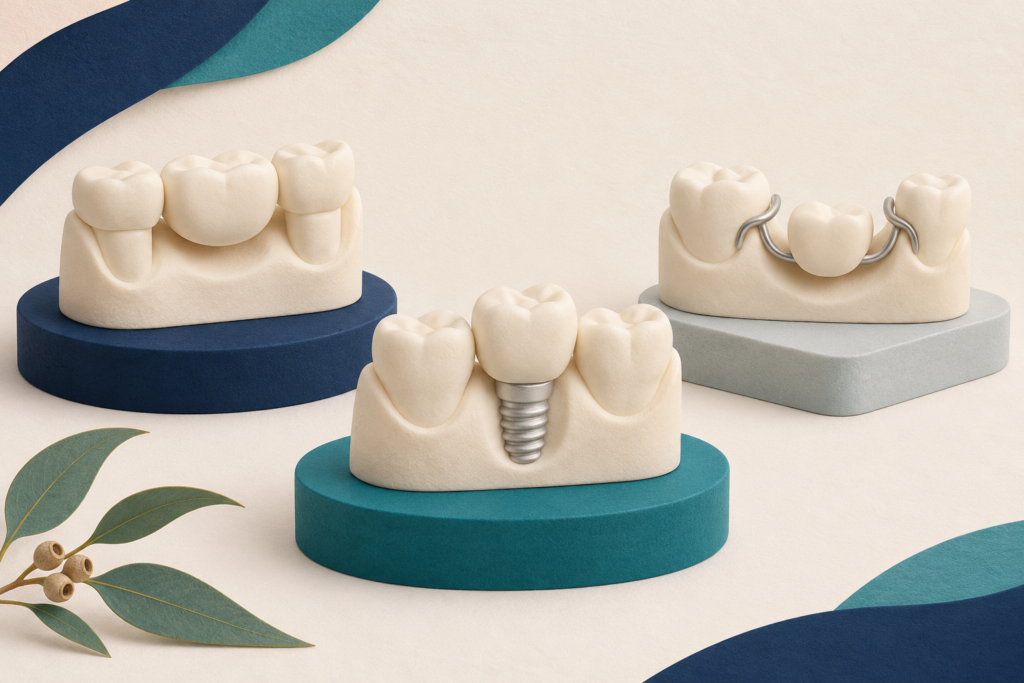
A bridge, implant-supported restoration and partial denture can replace missing teeth, but they differ in how they are supported and cared for. There is no single best option for every gap.
How do the options differ?
- A tooth-supported bridge is fixed in place and uses neighbouring teeth for support. The amount of preparation depends on its design.
- An implant-supported tooth replacement uses an implant placed in the jaw. It involves surgery and assessment of suitability.
- A partial denture is removable and can replace several missing teeth in one appliance.
The Leeds Teaching Hospitals guide to partial dentures explains these alternatives. For an Australian overview of implant treatment and its risks, see Healthdirect's dental implant information.
Compare everyday practicalities
Ask for a demonstration of cleaning, not just a description of how the replacement will look. Consider whether you can comfortably manage the recommended routine, attend reviews and arrange repairs if needed. Discuss any dexterity difficulties or previous problems with appliances.
- Will I remove it myself, or will a dentist need to remove it?
- What happens to the teeth beside the gap?
- What appointments and healing stages are involved?
- Will I need a temporary replacement?
- What parts may need adjustment, repair or replacement?
- Is leaving the gap a reasonable option in my circumstances?
Ask for like-for-like estimates
Compare the complete treatment and maintenance plan. A laboratory-made restoration, surgical stage and temporary appliance may be separate line items. Ask your health fund to assess the proposed item numbers rather than relying on a general statement that dental treatment is covered.
The restorative dentistry page is a starting point for discussing your needs. You can also read about dentures and dental implants before an assessment. A decision should account for oral health, risks, personal preferences and ongoing care—not just the upfront fee or whether an option is fixed.
Clinical Note: Any surgical or invasive dental procedure carries risks. Before proceeding, you should seek an opinion from an appropriately qualified dental practitioner. The information on this website is for general educational purposes only.